 English
 Deutsch
 Polski
 Italiano
 Español
 Français
 Português
 عربي
عربي 
Blog
Electric Forklift: A "Dual Province" Tool for Reducing Storage Costs and Increasing Efficiency
In the context of intensified competition in the warehousing and logistics industry, "cost reduction and efficiency improvement" has become the core demand of enterprises, while high energy consumption and labor costs are the main pain points. Electric forklifts, with their dual advantages of "saving energy" and "saving manpower", are becoming a revolutionary tool for warehouse operations, solving cost problems for enterprises.
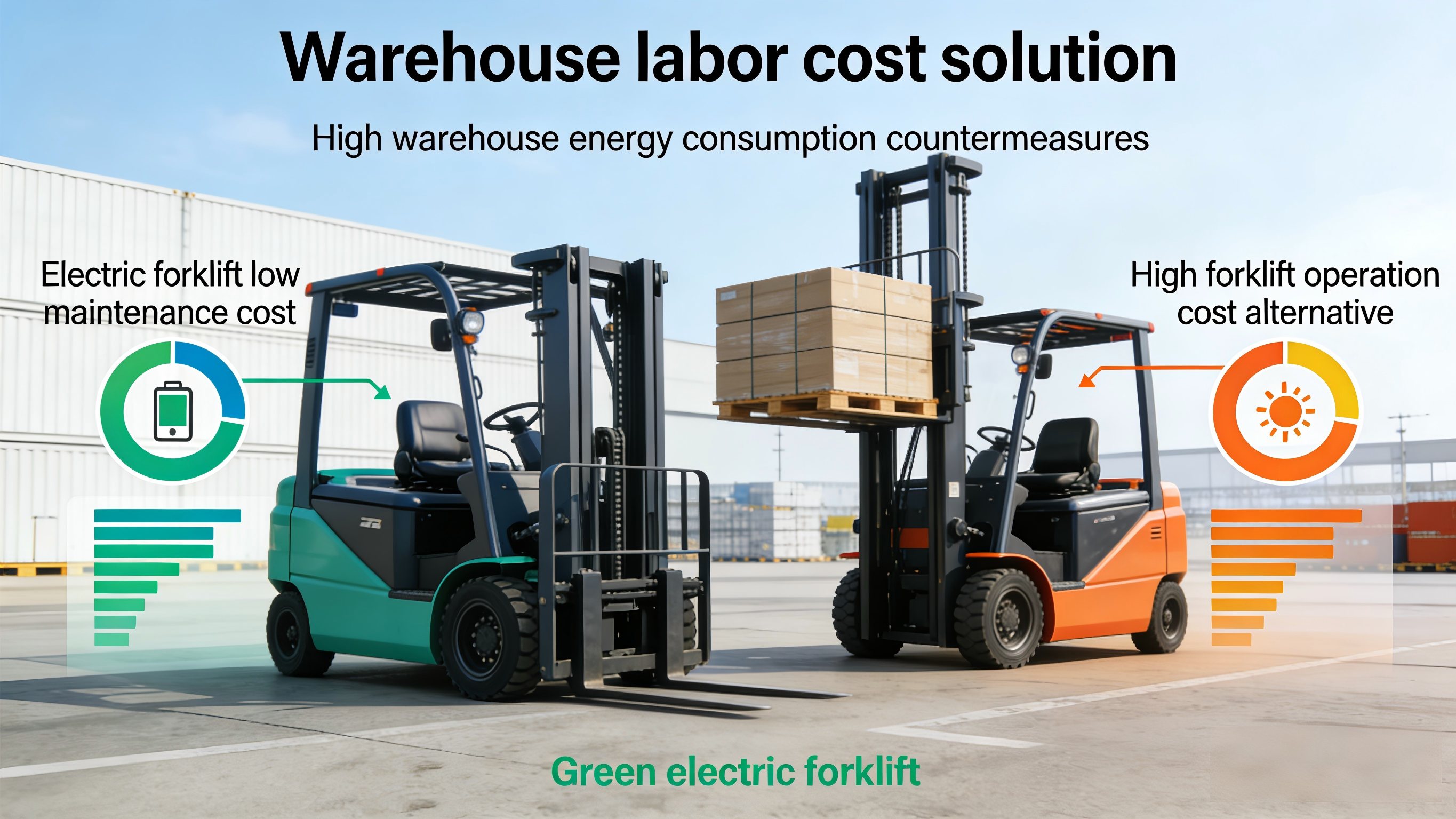
Energy conservation is one of the core advantages of electric forklifts. Traditional internal combustion forklifts rely on fuel, which not only affects costs due to fluctuations in oil prices, but also highlights issues with fuel consumption and exhaust emissions. Electric forklifts, especially lithium-ion models, have significantly lower energy consumption costs, with electricity bills only half to one-third of the fuel costs of internal combustion forklifts. Data shows that among the same level of 3-ton models, the daily energy cost of electric forklifts for 8-hour operation is about 60 yuan, while that of internal combustion forklifts exceeds 300 yuan. A single unit can save more than 60000 yuan in energy costs throughout the year.
From the perspective of full lifecycle cost, lithium-ion electric forklifts have reduced energy consumption by more than 30% compared to ordinary models, and maintenance costs are only one-third of those of fuel vehicles. They do not require frequent replacement of oil, filters, and other components, further reducing operating costs. At the same time, electric forklifts have zero exhaust emissions, which is in line with the green warehousing policy orientation, can avoid environmental penalty risks, and balance economic and environmental benefits.
In terms of saving manpower, electric forklifts also perform outstandingly. In traditional warehousing, forklift drivers need to work three shifts to ensure operation, and labor efficiency is affected by fatigue and proficiency. There are also problems such as difficulty in recruitment and high turnover. Electric forklifts are easy to operate and have a low learning threshold. Novices can start working after 1-2 weeks of short-term training, which significantly shortens the one month training period compared to internal combustion forklifts. This not only reduces training costs for enterprises, but also quickly alleviates the manpower shortage.
In addition, electric forklifts have lower operating intensity, and the design of shock-absorbing seats and precise control systems can reduce driver fatigue, improve operational stability, and avoid rework losses caused by operational errors. After the introduction of electric forklifts in a certain e-commerce warehouse center, the 3-shift system was adjusted to 2-shift system, reducing the number of drivers per shift from 6 to 4, resulting in monthly savings of over 50000 yuan in labor costs; After replacing internal combustion forklifts with electric forklifts in a certain food warehouse, the training period was shortened by 60%, and related costs were saved by more than 200000 yuan per year.
Electric forklifts also indirectly reduce labor demand by improving operational efficiency. In special scenarios such as narrow alleys and cold storage, its flexible maneuverability can improve space utilization and reduce the time spent on ineffective operations; After being equipped with relevant devices, multiple processes can be completed synchronously, greatly increasing the workload per unit time. Work that originally required 2-3 people to cooperate can now be managed and controlled by one person.
For warehousing enterprises, the "dual province" advantage of electric forklifts not only reduces costs, but also promotes the upgrading of operational models. A 150000 yuan electric forklift, with the advantage of saving 200000 yuan in labor costs and 30000 yuan in energy consumption and maintenance costs annually, can recoup its investment in 1.5 years and meet the different needs of large, medium, and small enterprises. Under the trend of green and low-carbon development, electric forklifts have become the core engine for reducing storage costs and increasing efficiency, helping enterprises enhance their sustainable competitiveness.