 English
 Deutsch
 Polski
 Italiano
 Español
 Français
 Português
 عربي
عربي 
Blog
48V Electric Reach Truck Improving Efficiency in Warehouse Operations
A. Core Advantages in Warehouse Work
(I) Structural and Stability Advantages, Suitable for High-Load Warehousing Scenarios
The compact body structure and sit-down operation design combine flexibility and ease of control, making it particularly suitable for operation and turnover in narrow aisles and dense shelving areas of warehouses, reducing operational limitations caused by space constraints.
The centrally located drive unit and low center of gravity, combined with the standard forward and backward tilting function of the forks, effectively prevent cargo tipping, significantly improving load stability in high-tonnage and high-lift scenarios, meeting the storage needs of multi-layer shelving and heavy goods in warehouses.
The side-pull battery design + standard battery roller trolley makes replacement convenient, fully meeting the continuous operation needs of multi-shift warehouses and avoiding downtime due to cumbersome battery replacement.
(II) Power and Energy Consumption Advantages, Reducing Operating Costs
Using a full AC drive system, compared to traditional DC motors, it eliminates the need for carbon brush replacement, significantly reducing equipment downtime for maintenance. It also features regenerative braking, resulting in more economical energy consumption and lower long-term operating costs.
The EPS steering system reduces energy consumption by approximately 20%, and provides precise steering, reducing driver fatigue and indirectly increasing continuous operating time and accuracy, suitable for high-frequency steering and precise positioning operations in warehouses.
The 48V lead-acid battery (48/400 V/Ah specification) provides stable power, combined with the 75 AC drive control method, resulting in smooth power output and strong climbing ability (empty/full load climbing rate ≤10%), capable of handling complex road conditions such as ramps and uneven surfaces in warehouses.
(III) Safety and Intelligence Advantages, Improving Operational Reliability
The brand control system is equipped with multiple automatic protection systems, providing comprehensive protection from power output and load limits to operational safety, reducing equipment failures and safety risks in warehouse operations.
The intelligent high-definition display instrument provides real-time feedback on vehicle operating status and supports fault display functions, allowing staff to quickly troubleshoot and repair faults, reducing operational interruptions caused by equipment failures. The forklift is equipped with comprehensive safety features such as an overhead guard and service brake (electromagnetic brake), combined with precise lifting/lowering control (maximum lifting speed of 0.450 m/s, maximum lowering speed of 0.420 m/s), reducing the risk of cargo collision and personnel injury.
(IV) Advantages in Size and Performance Adaptation, Adapting to Diverse Warehousing Needs
The narrow body width (1270mm/1270-1460mm) and minimum turning radius of only 3007-3010mm allow for flexible maneuvering in narrow warehouse aisles, improving space utilization.
The lifting height covers 8000-12000mm, with a free lifting height of up to 1200mm, adapting to the storage needs of high-rise warehouse racks. At the same time, the low height when the mast is retracted (3550-4950mm) facilitates operation in low-clearance spaces.
The wide fork adjustment range (250-705mm/260-840mm) accommodates common pallet sizes such as 1000×1200mm, and the reasonable stacking aisle width (Wa≥1900mm) improves cargo handling adaptability.
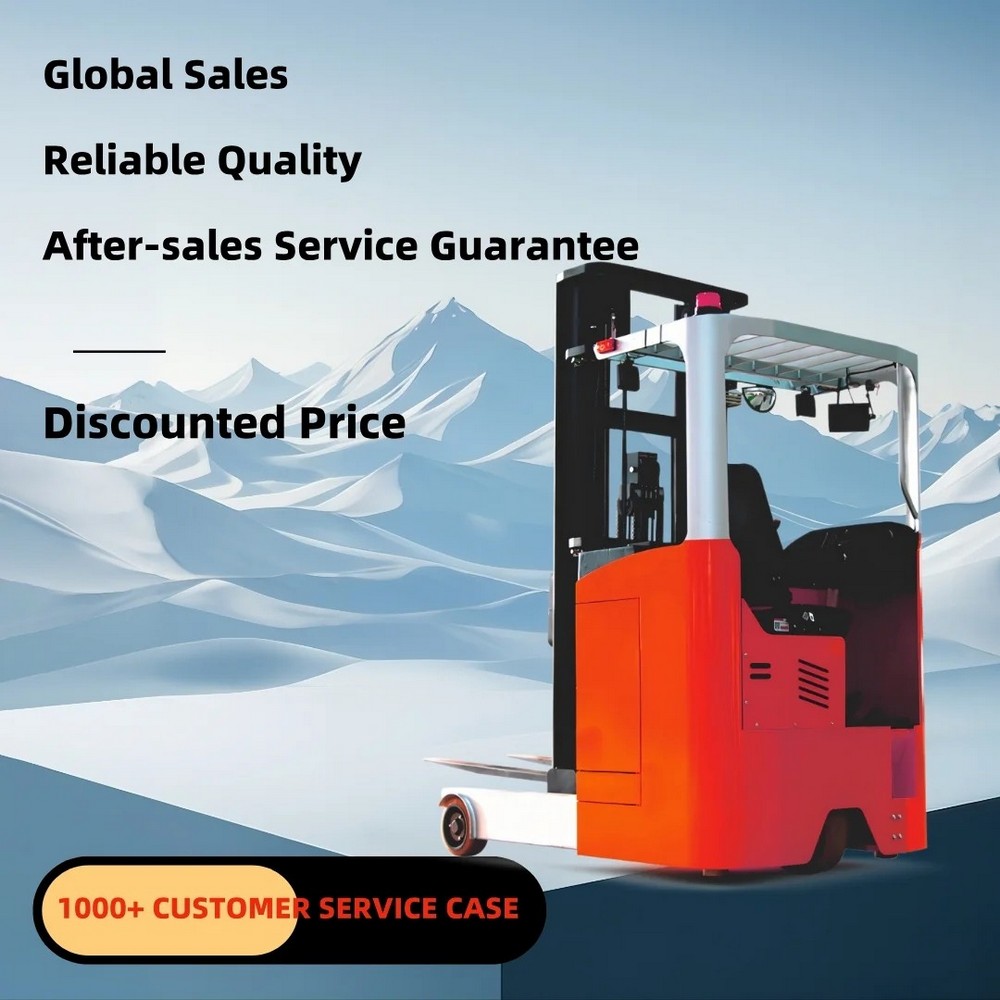
B. Work Efficiency Improvement Plan
(I) Equipment Optimization and Adaptation Adjustments
Select side shifters as needed: Although side shifters reduce the rated load by 100kg, they significantly improve cargo positioning accuracy, reducing the number of forklift adjustments. This is especially suitable for warehouses with dense shelving and precise stacking scenarios, resulting in a more significant overall improvement in operational efficiency.
Rational battery management: For multi-shift operations, prepare spare batteries in advance and quickly replace them during work intervals (side-pull battery + roller cart design) to avoid downtime due to battery depletion and ensure 24-hour continuous operation.
Optimize forklift and pallet matching: Adjust the fork spacing (250-840mm range) and select appropriate fork specifications (45/125/1070mm, etc.) based on the commonly used cargo sizes in the warehouse, reducing adjustment time during loading and unloading and improving single-operation efficiency.
(II) Operation and Process Optimization
Enhanced driver training: Focus on proficient use of EPS precise steering and forward/backward tilting functions to reduce time-consuming errors such as cargo shifting and repositioning; familiarize drivers with intelligent instrument fault prompts to improve their ability to troubleshoot minor problems and shorten downtime.
Work path planning: Combine the forklift's minimum turning radius and body width characteristics to optimize warehouse aisle width (adapting to a minimum turning radius of 3007-3010mm), and plan the shortest path between "loading/unloading point - storage location" to reduce unnecessary travel distance.
Load and lifting height matching: Based on the load curve diagram (rated load center C=500mm), rationally distribute cargo weight to avoid speed reduction and equipment damage caused by overloading or uneven load distribution; select appropriate lifting speeds based on rack height (differentiated speeds for empty/full load) to improve lifting efficiency.
(III) Maintenance and Management Assurance
Regular maintenance reduces failures: Utilize the maintenance-free characteristics of the all-AC drive system, focusing on checking tires (polyurethane material, wear-resistant but requiring regular inspection), braking system (electromagnetic braking), and battery status to avoid work interruptions due to equipment failures. Smart Meter Data Utilization: Real-time monitoring of data such as driving speed, lifting speed, and battery level allows for efficient scheduling of work tasks and timely battery replacement before power runs out, preventing unexpected downtime. Fault indicators allow for proactive identification of equipment problems and preventative maintenance.
Adaptation to Warehouse Scenarios: For high-bay racking operations (lifting height 12000mm), the maximum mast height (12977mm) is checked in advance to ensure compatibility with the warehouse ceiling height; for narrow aisles, the compact design of the vehicle is utilized with a "one-way circulation" operation mode to reduce waiting time during vehicle passing.