 English
 Deutsch
 Polski
 Italiano
 Español
 Français
 Português
 عربي
عربي 
Blog
Core Features and Key Advantages of 3-wheel Electric Forklift
1. Core Design Features:
1) 3-point wheel configuration: 1 rear drive/steer wheel+2 front load wheels (no second rear wheel).
2) Tight turning radius: Rear wheel articulates (often 180°+), enabling pivot turns in ultra-narrow spaces.
3) Electric powertrain: Battery-electric (lead-acid/Li-ion), zero local emissions, low noise, minimal maintenance vs IC engines.
4) Compact chassis: Lower overall length/width than 4-wheel counterbalance models with the same load.
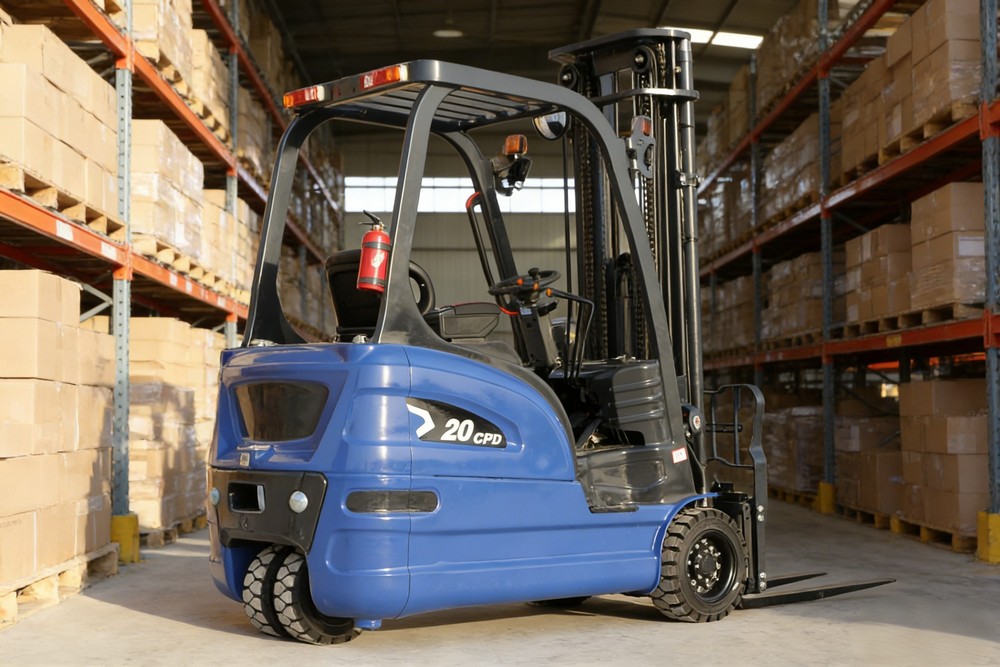
2. Key Advantages vs 4-Wheel Electric Forklifts:
1) Superior maneuverability: Turning radius 30–40% smaller (e.g., 1.5–1.8 m for 1.5–2 t capacity). Rear wheel can pivot sharply. Perfect for narrow aisles, tight warehouses, retail backrooms, and indoor yards.
2) Smaller footprint: Narrower overall width; fits through standard doorways (often <1.2 m wide) without modification. Easy to move between rooms, elevators, and small loading docks.
3) Lower floor load requirements: Concentrated but lighter weight distribution vs 4-wheel; less stress on concrete floors. Suitable for older buildings or mezzanines with lower floor ratings.
4) Lower energy consumption (some models): Lighter weight+more efficient steering=lower kWh/shift (especially with Li-ion batteries). Reduces operating costs for high-cycle indoor use.
3. Key Advantages vs IC-Engine (Gas/Diesel/LPG) Forklifts:
1) Zero emissions & low noise: Ideal for indoor, food/beverage, cold storage, or cleanroom applications (IC engines produce fumes and noise).
2) Lower total cost of ownership (TCO): Fewer moving parts (no engine, transmission, or exhaust system)=less maintenance, lower fuel costs (electricity < LPG/diesel).
3) Regenerative braking: Many models recover energy during braking, extending battery life.
4. Unique Use Cases Where Three-Wheel Electric Shines:
1) Narrow-aisle warehouses: Aisles as narrow as 2.5–3 m (vs 3.5+ m for 4-wheel counterbalance).
2) Urban logistics & last-mile delivery: Tight loading docks, small warehouses, or multi-story buildings with elevators.
3) Indoor/outdoor transitional work: Covered docks, ramps, or short outdoor runs (with non-marking tires for indoor floors).
4) Food/pharmaceutical/cold storage: Clean, quiet, emission-free operation; Li-ion models perform well in low temperatures.